
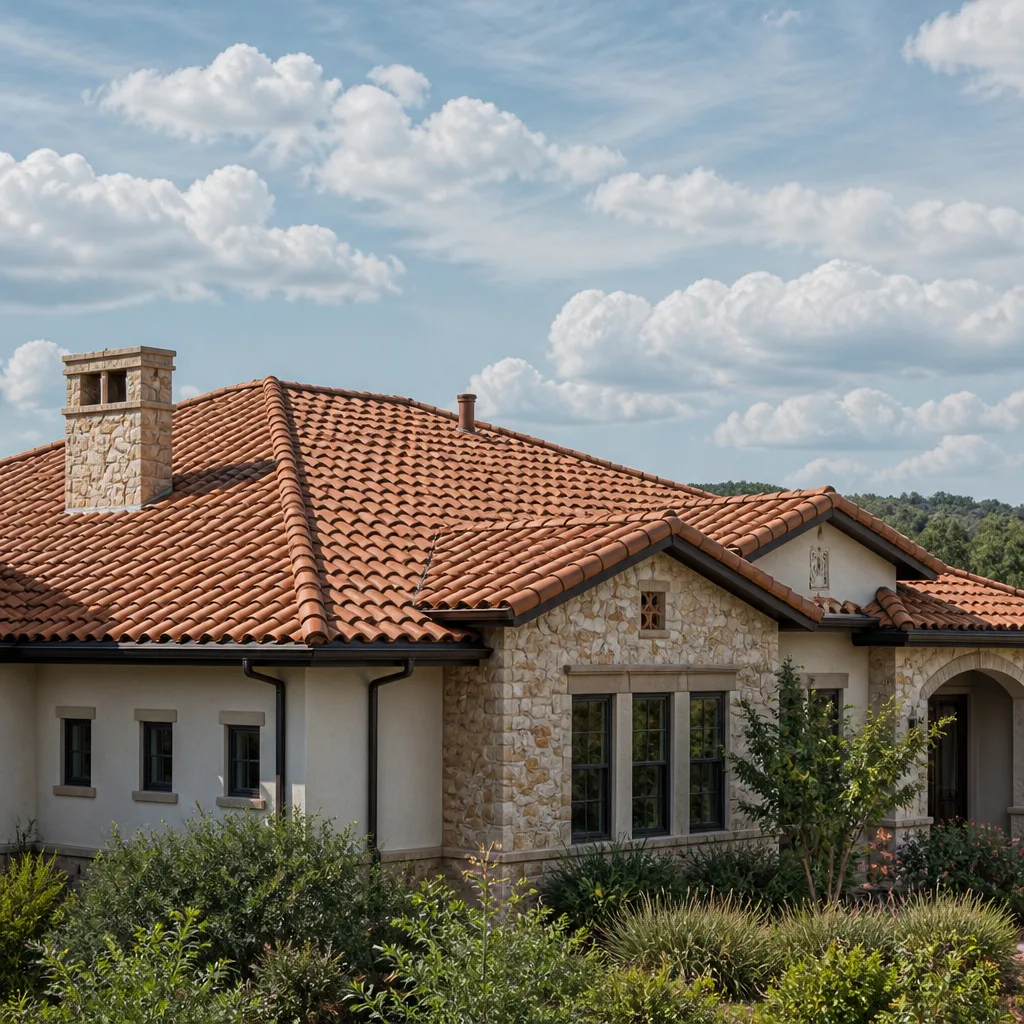
 Tile roofing
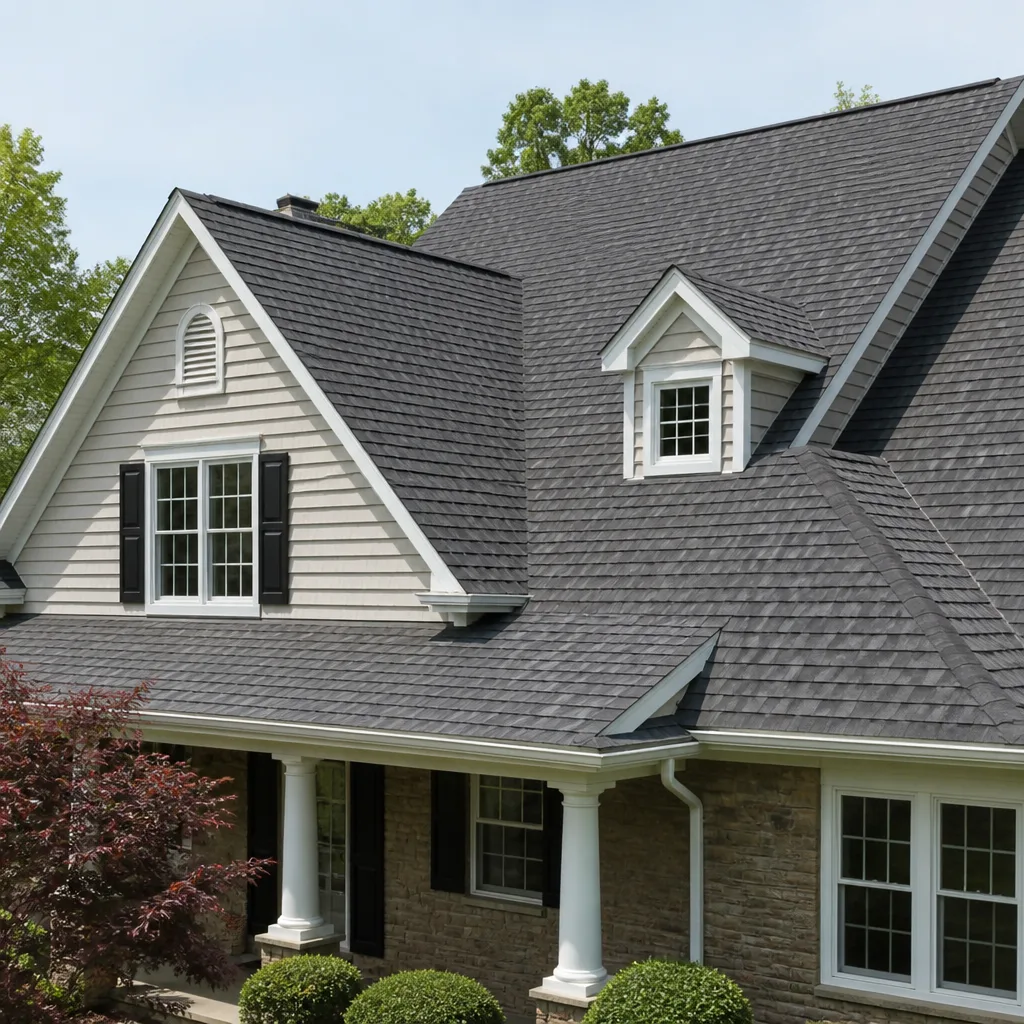 Architectural shingles
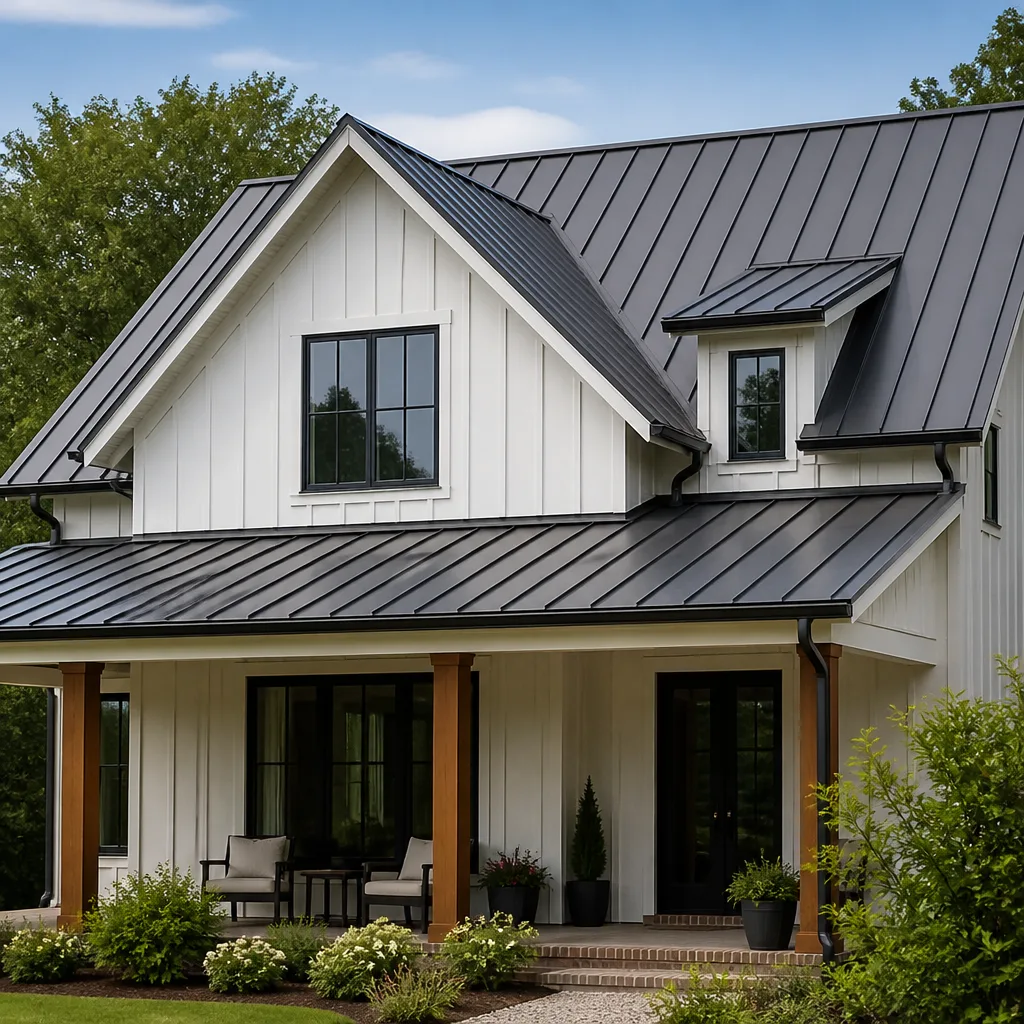 Metal roofing
 GAF
GAF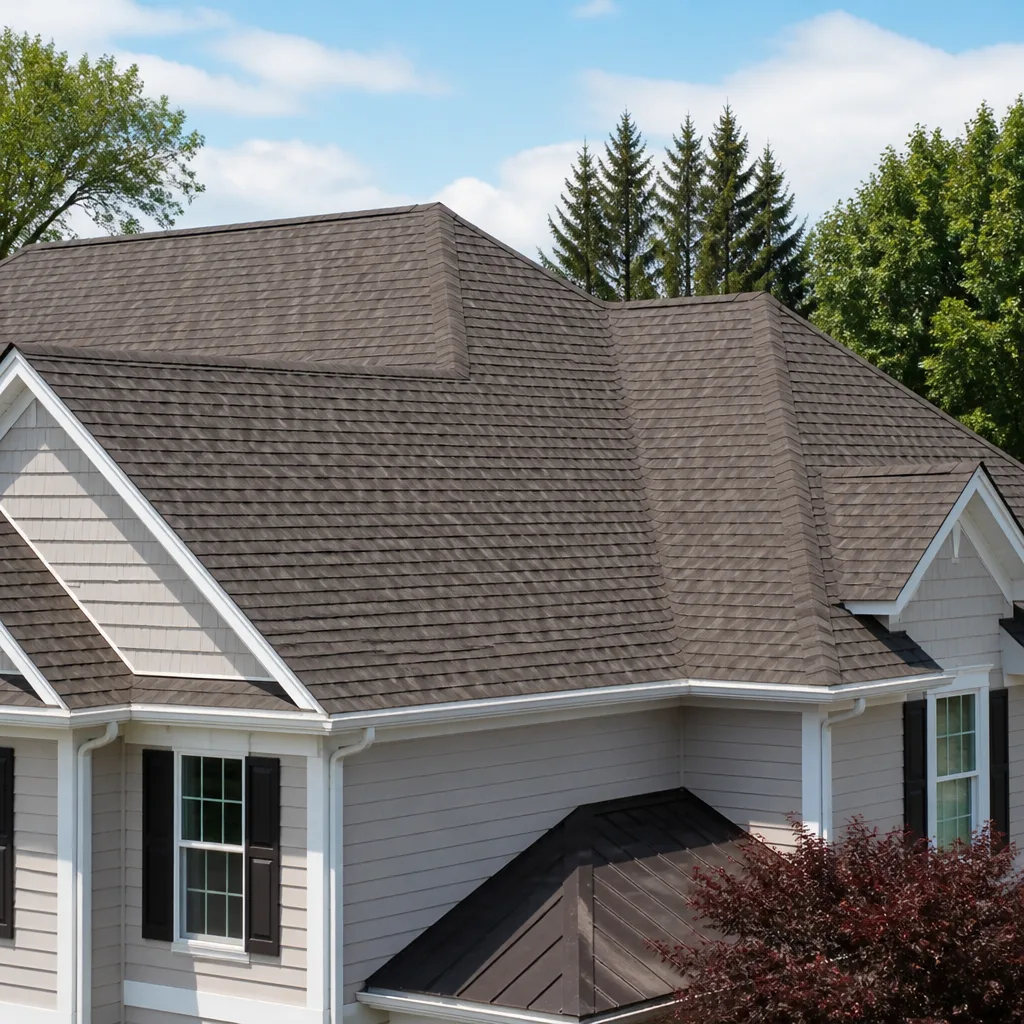 Owens Corning
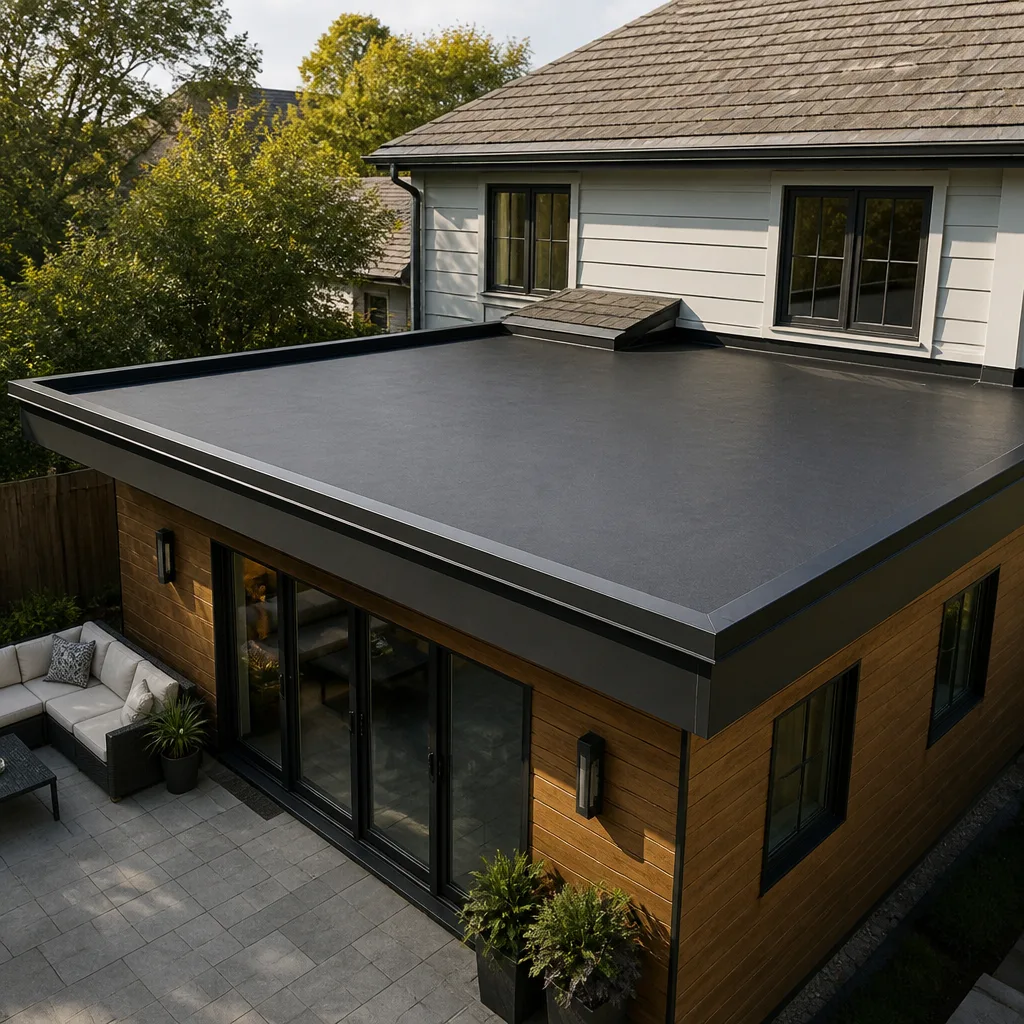 Flat & low-slope
Free roof inspection with deck photos before we talk money - GAF and Owens Corning certified installation
Atlas Ridge Vent Installation: The Riverside Owner’s Guide
We stock and install Atlas ridge vent systems across Riverside, with most installations running $850 to $1,650 fully installed on a typical single-family home. If you’re calling about a failed Atlas ridge vent, we can usually get a crew out within a few days, and yes, we keep Atlas vent material on our trucks when we’re working the Riverside and Inland Empire area. Most homeowners discover the problem the hard way: a heat spike in the attic, a sudden jump in the cooling bill, or water staining along the ceiling near an exterior wall. Sometimes it’s a cracked vent cap that’s been up there ten or fifteen years, doing its job quietly until one Santa Ana wind season too many finally splits it open.
Key takeaways before we get into the details:
- Atlas ridge vents fail predictably in Riverside’s heat. UV degradation, not impact damage, is what kills them.
- We match the replacement to your specific Atlas line, not whatever generic vent is on sale.
- Every installation gets a written price before work starts and a written guarantee before we leave.
- You’re never guessing who’s on your roof. Our technicians are background-checked and uniformed.
Which Atlas Models This Applies To
Atlas makes its ridge vent systems under a few different lines you may recognize: the Atlas WeatherMaster, the Atlas Pinnacle, and the Atlas HP (High Performance) series. Each one has slightly different profile dimensions and shingle-over requirements. The HP series, for example, has a wider vent opening than the WeatherMaster, which changes how much net free area you’re getting per linear foot of ridge. If your roofer ten years ago put a WeatherMaster-compatible vent on a roof that really needed the HP airflow, your attic’s been running hotter than it should every summer since. In Riverside, where July attic temperatures routinely hit 140 degrees or higher, that airflow difference matters for your shingles’ lifespan and your air conditioning bill.
Here’s the compatibility gotcha we see regularly: Atlas ridge vents are not universally interchangeable with GAF, Owens Corning, or CertainTeed systems. The nail flange spacing, the vent profile height, and the shingle overhang reveal are all slightly different. An aftermarket generic vent might fit “close enough” in January, but by August the expansion and contraction in Riverside’s heat has pulled it out of alignment, and now you’ve got gaps. When we match your existing Atlas vent, we verify the model line from the embossed markings on the underside of the vent before we order or pull anything from the truck. For older installs where the marking has worn off, we measure the vent opening width and profile height and match to Atlas’s current spec sheets. We don’t guess.
As for OEM versus aftermarket: for Atlas ridge vents, we strongly prefer OEM. The vent itself isn’t a part that saves you much by going generic, and the failure mode of a cheap knockoff, warping and cracking at the end caps, means you’ll be paying for another ridge replacement in three to five years instead of twelve to fifteen. We’re an independent contractor, not affiliated with Atlas, so this recommendation isn’t about brand loyalty. It’s about what holds up on a Riverside roof line.
Styles & brands we work with
Signs Your Atlas Ridge Vent Installation Is Failing
- Attic temperature spike in late afternoon. The ridge vent is the single largest exhaust point for your attic’s built-up heat. If your attic is suddenly 20 degrees hotter on one side of the house, the vent nearest that end has likely cracked, lifted, or separated at a seam. In Riverside’s climate, this is the earliest and most reliable warning sign.
- Water staining on ceilings near exterior walls. Ridge vents fail at the end caps first. When an end cap cracks and lifts, wind-driven rain from a Riverside winter storm gets driven straight into the attic. The water runs down the roof plane and pools at the wall line, so the stain shows up well below where the leak actually is.
- Visible cracking or brittleness on the vent. If you can see the ridge vent from the ground and it looks chalky, cracked, or warped, it’s already compromised. Riverside’s UV load is brutal on polymer vents. The plastic reaches surface temperatures far higher than the ambient air, and after enough years of that, the material doesn’t flex anymore. It shatters.
- Shingle edges lifting around the ridge line. A properly installed Atlas ridge vent has a specific reveal over the vent’s flange. When the vent underneath warps, it pushes the shingles upward, and you’ll see a wavy, uneven ridge line. That’s not a cosmetic issue. That’s the vent deforming under heat load, and it means the system’s already failed.
- Running water sound inside walls during rain. This one’s subtle but telling. If you hear water moving inside a wall cavity during a storm, and you’ve ruled out a plumbing leak, check the ridge vent. A cracked vent lets water enter the attic and follow the rafter tails down to the wall top plate. By the time you hear it, the decking near the ridge is already getting wet.
One thing worth saying clearly: if any of these signs match what you’re seeing, don’t wait through another Riverside summer to address it. A compromised ridge vent turns a small ventilation repair into a decking replacement and possibly insulation replacement. The longer water or trapped heat has access to your attic, the more expensive the correction becomes.
See the difference
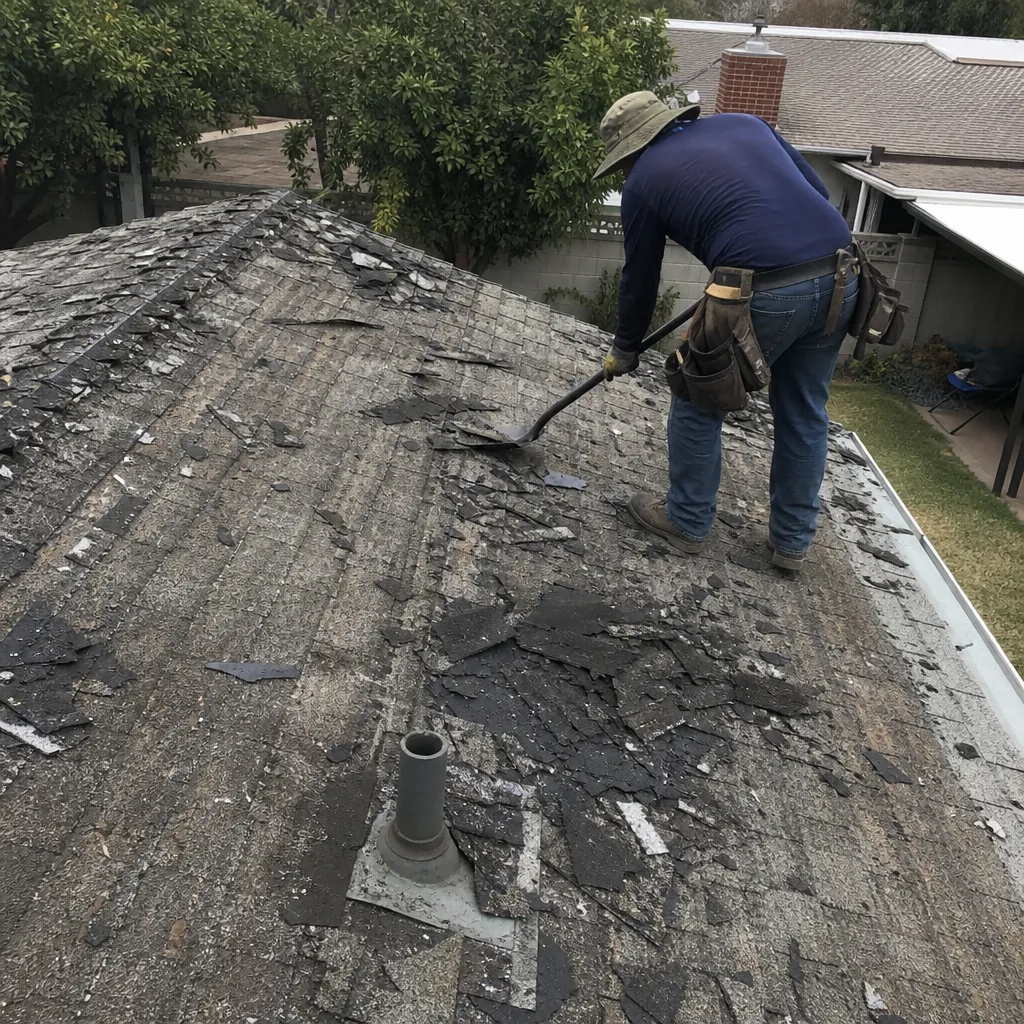 Before
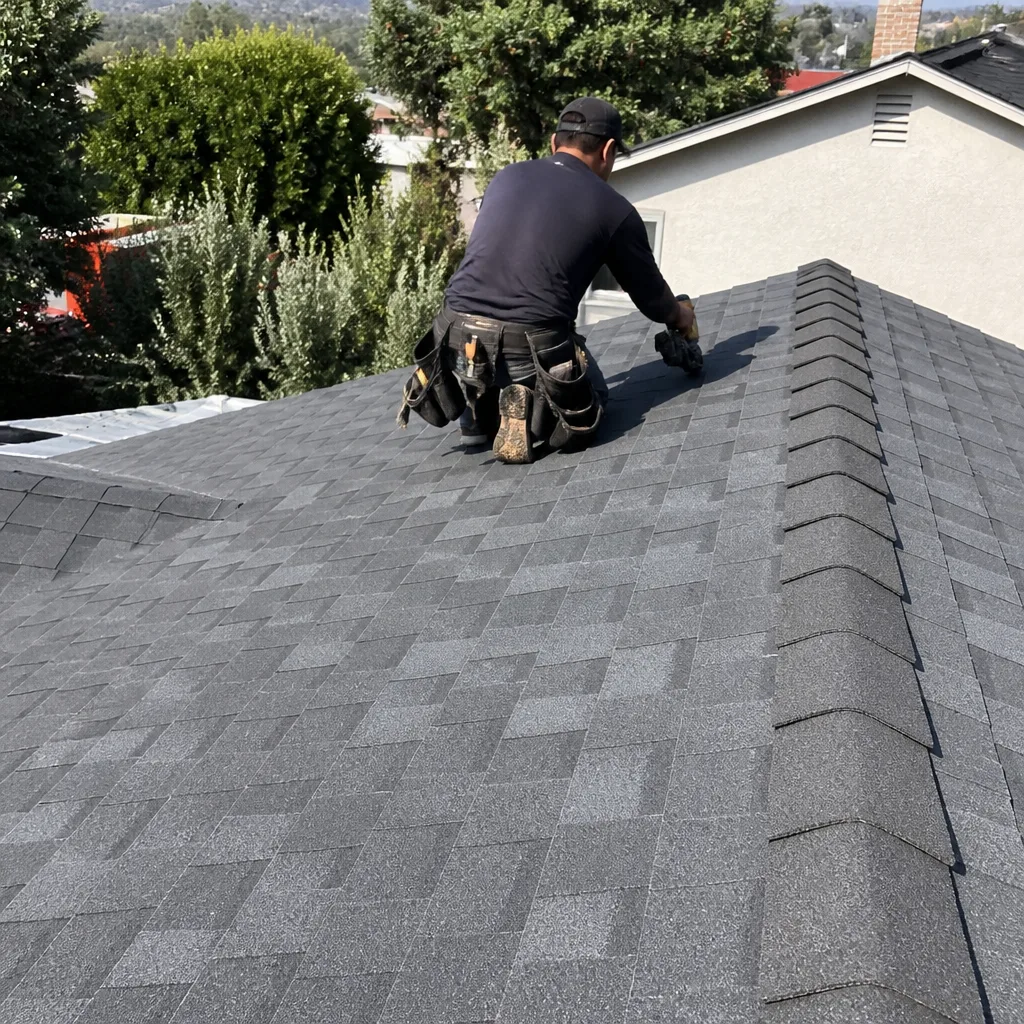 After
After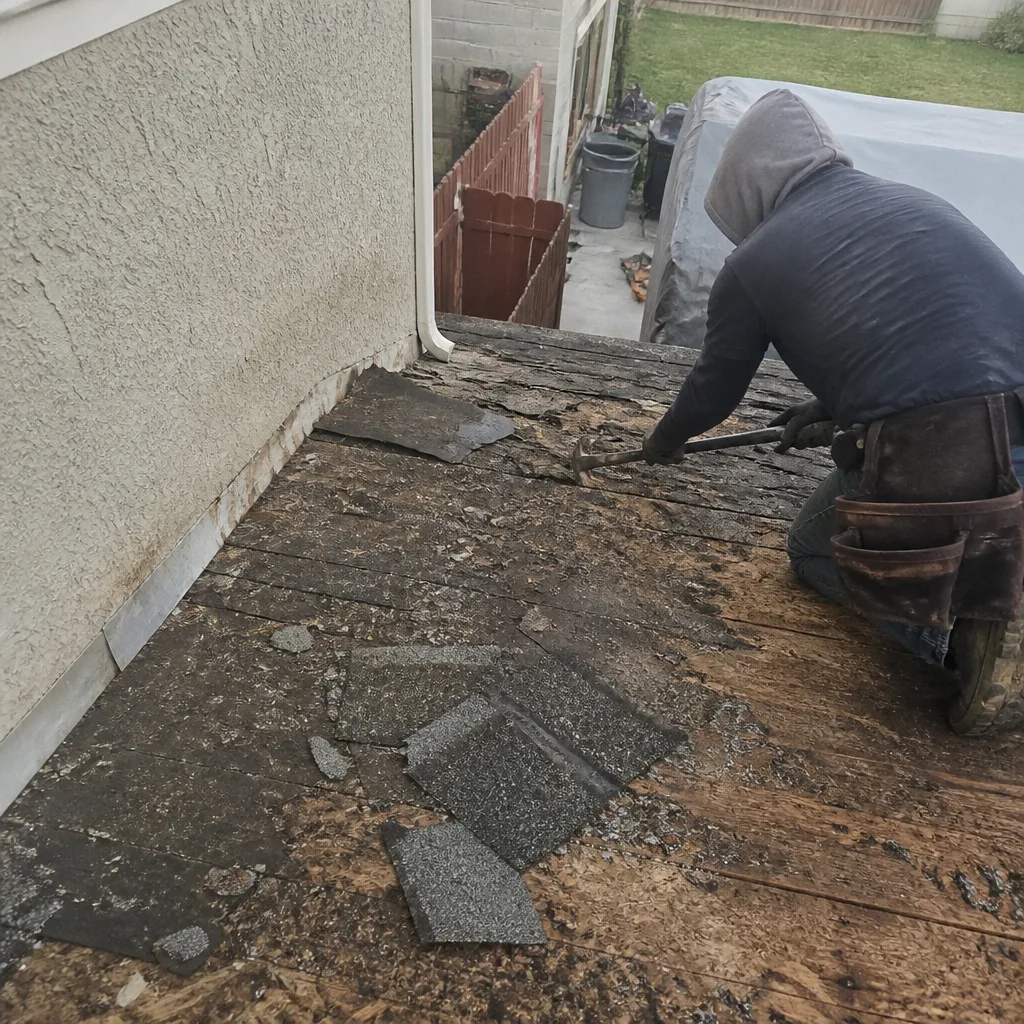 Before
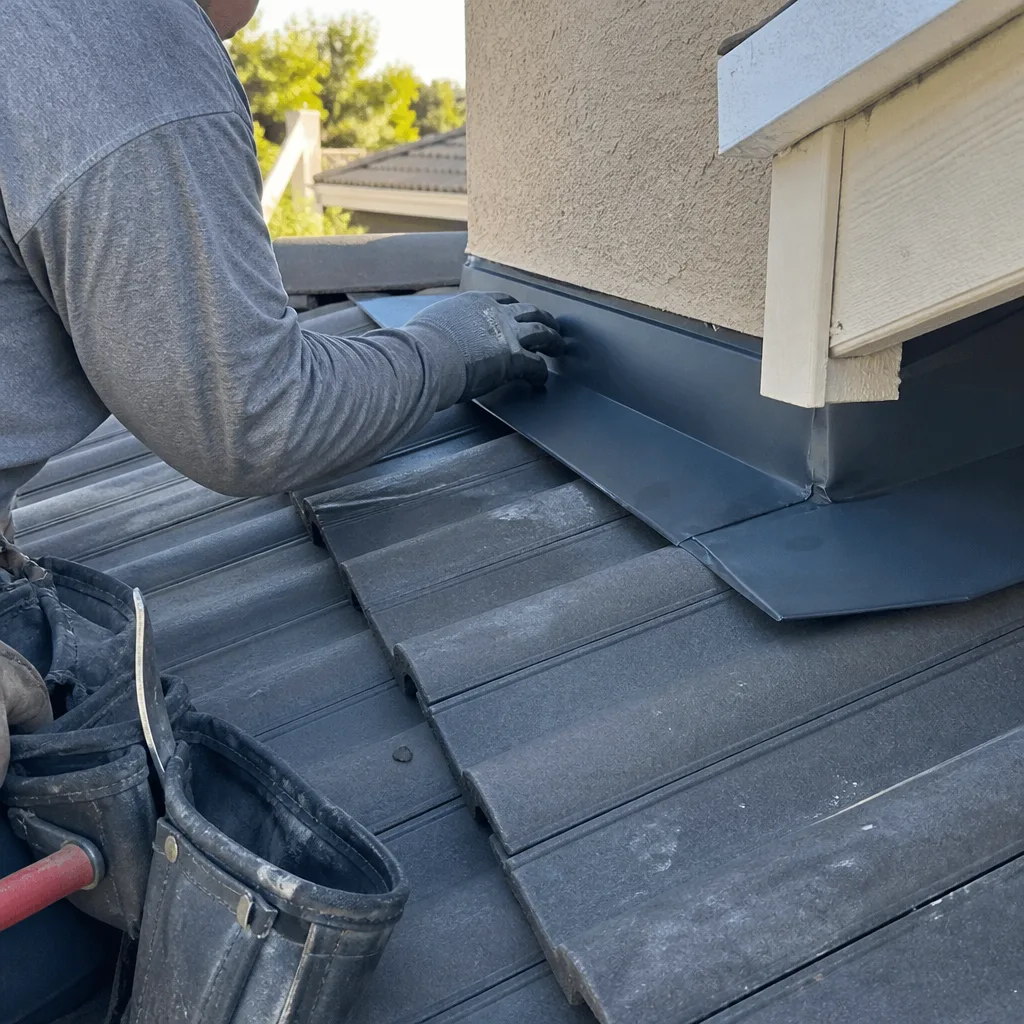 After
After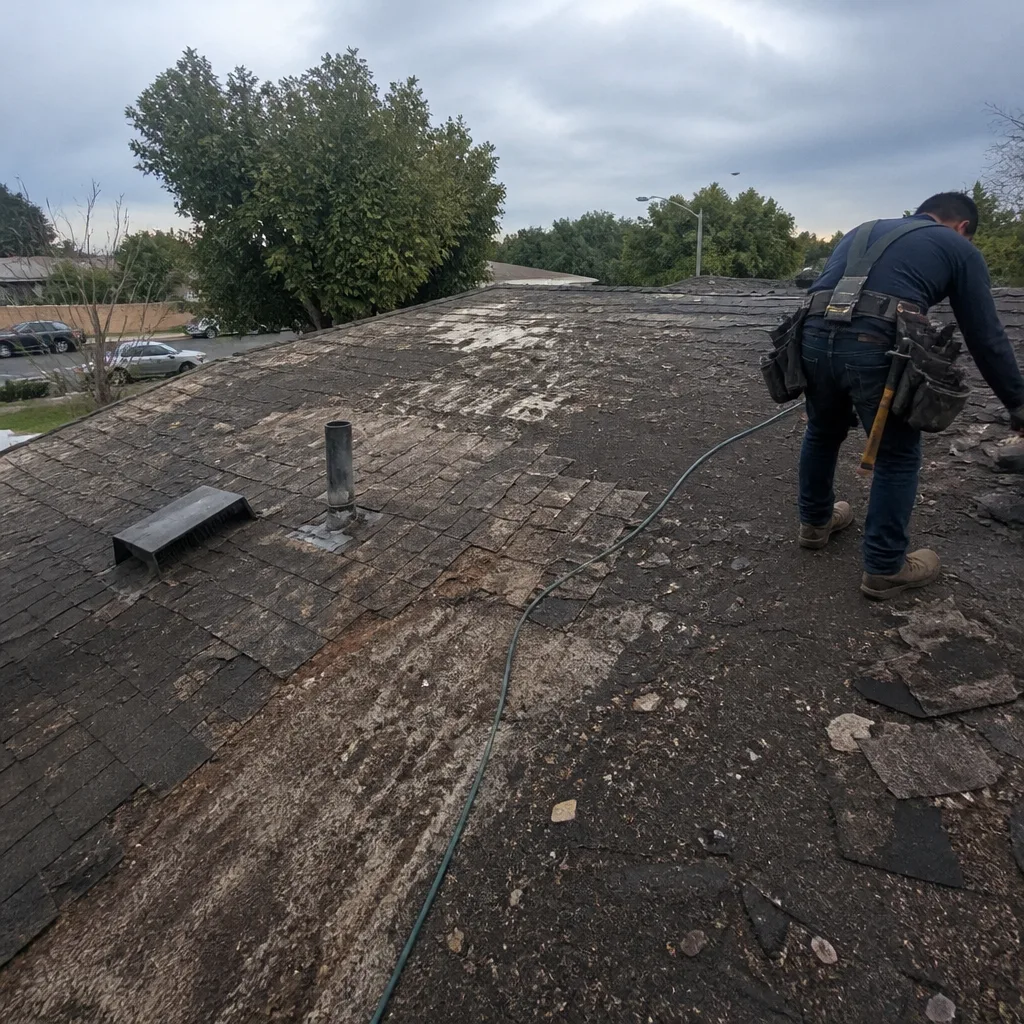 Before
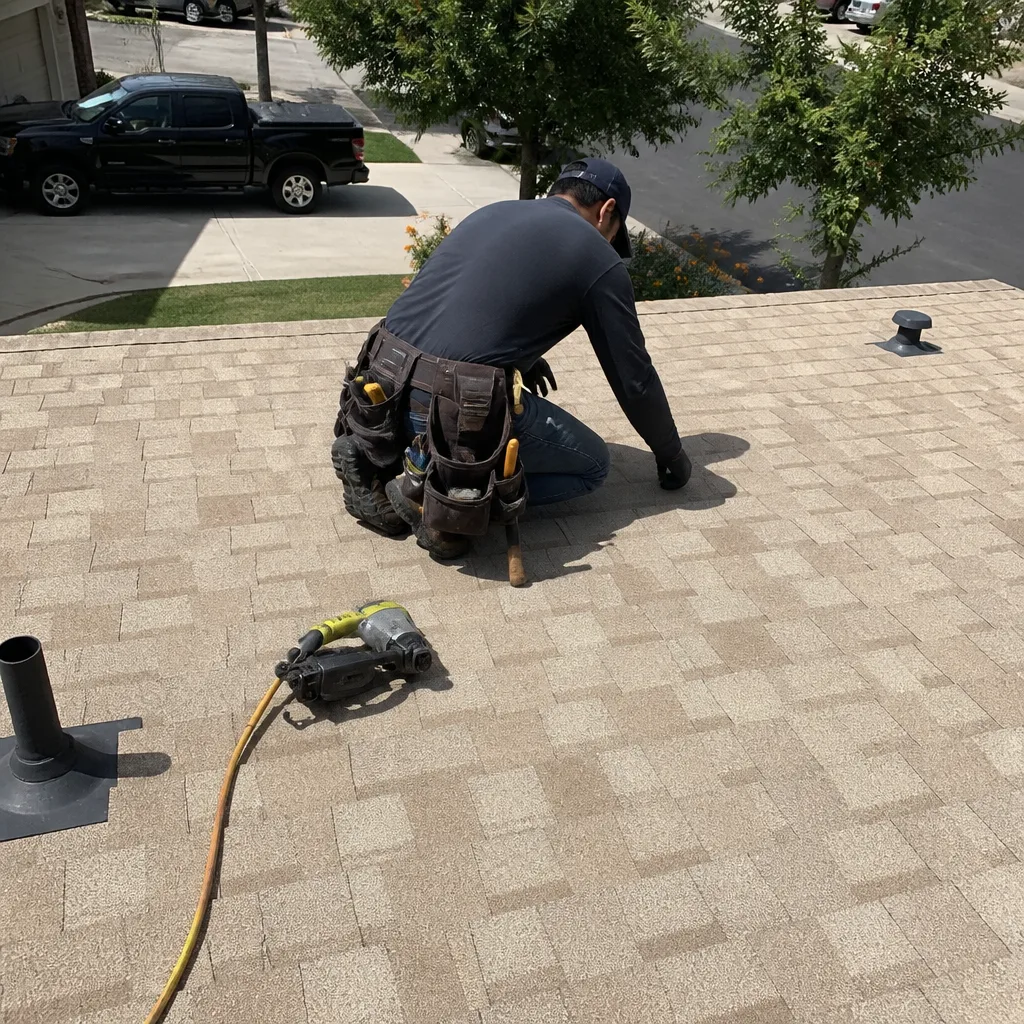 After
AfterReplacement Cost & What’s Included
In Riverside, expect a full Atlas ridge vent replacement on a standard single-family home to run between $850 and $1,650 installed. That range covers removing the old vent material, inspecting and repairing the underlying decking where it’s been exposed to water or heat damage, installing the new Atlas vent with matching shingles or cap material, and sealing the end caps properly. Homes with long ridge lines, steep pitches, or multi-story roof access fall on the higher end. Tile roofs in neighborhoods like Hawarden Hills also run higher because the tile removal and reset around the ridge takes more labor than a comp shingle roof.
Here’s a realistic breakdown of what’s in the price:
- Atlas OEM vent material: $180 to $420 depending on ridge length and series
- Labor and removal of failed vent: $450 to $850
- Decking repair, if needed: $75 to $250 per sheet of OSB or plywood, typically one to three sheets
- Matching cap shingles or tile reset: $120 to $350
The price we quote is the price you pay. We’re a Kingswell family roofing company, founded in 2000, and the written price rule is non-negotiable: you get a full line-item price in writing before any work starts, and if something changes once we get the old vent off, we stop, show you what we found, and get your sign-off before spending another dollar. Every Atlas ridge vent installation also carries our written guarantee, delivered before we leave your property, and it’s backed by the 365-Day Done Right Promise. If something we did isn’t holding up inside that year, we come back and correct it at no charge. Greg Holloway’s crews have been working Riverside rooftops long enough to know that a ridge vent done wrong shows up in the next rain, and that’s not a call we want to take.
DIY or Call Us?
There are a few things an owner can safely check from the ground: visible cracking on the vent profile, lifted shingle edges along the ridge, or obvious end cap separation. Use binoculars if you need to. Getting on a ladder for a closer look is where we’d pump the brakes. Roof work in Riverside means steep pitches, tile that’s slippery with even a little morning dew, and summer surface temperatures that will burn a hand placed on a shingle at 2 p.m. Ridge vent replacement also means working at the highest point of the roof, which is exactly where a fall does the most damage. If you’re not a roofer, this isn’t the job to learn on. A failed ridge vent isn’t an emergency that demands you up there this weekend. It’s a repair that needs to be done correctly by someone who’s got the right ladder, the right fall protection, and enough Ridge work behind them to know the difference between a vent that seals and one that looks sealed. Call us at (562) 315-0297 and we’ll get eyes on it. The estimate is free, and it comes with a written price before we touch your roof. That’s just how it should work.
FAQs
We tell Riverside homeowners to expect 12 to 18 years from an OEM Atlas ridge vent. Homes with darker roof colors, full western sun exposure, or ventilation issues that push attic temperatures higher than normal will see the vent degrade on the shorter end of that range, sometimes in as little as 10 years. Riverside’s combination of 100-degree summers and UV intensity shortens the lifespan compared to coastal climates, where the same Atlas vent might go 20 years. Call (562) 315-0297 and we’ll assess your specific vent’s remaining life during the free estimate.
A cracked end cap can sometimes be replaced as a component, which runs $200 to $400 on its own. But a cracked or warped vent body is finished, and patching or caulking it buys you months, not years. In Riverside’s heat, a patched plastic vent expands and contracts every single day, and the patch fails when the material around it continues degrading. We’ll tell you honestly which situation you’ve got. The estimate to replace a failed vent is free, and so is a second visit if our repair doesn’t hold inside the guarantee period.
A standard single-story home with an asphalt shingle roof takes most of a day, typically four to seven hours from start to finish. Tile roof ridges take longer because each tile has to come off the ridge line and go back on in the right order. We don’t leave a ridge vent job half-finished or unprotected overnight if rain is in the forecast. Call (562) 315-0297 for a time estimate specific to your roofline, free.
Yes. We stock Atlas OEM ridge vent material for the WeatherMaster, Pinnacle, and HP lines, and we also carry GAF, Owens Corning, and CertainTeed systems for customers who have a different brand on their roof, including material from GAF, Owens Corning, CertainTeed, IKO, Atlas, Tamko, and Boral available by order. The Atlas stock lives on our trucks for Riverside calls. If you need a specific Atlas series color match, that may take a few days to order. We’ll tell you that before you commit to anything.
If your Atlas ridge vent is failing in Riverside, don’t let another hot season finish it off. Call us at (562) 315-0297 for a free estimate. A live person answers, day or night, and you’ll get a written price before any work begins. We tell you the price before we touch your roof. That’s just how it should work.
Written by Greg Holloway, Owner, Tilehurst Roofing Riverside at Tilehurst Roofing Riverside, serving Riverside and nearby areas.